
This week, families around the United States will celebrate Thanksgiving. The American Thanksgiving, like many harvest ceremonies from around the world, originated sporadically and independently around New England in the late 17th Century. Unfortunately, the concept that Indians and Pilgrims came together in 1621 for the "first" Thanksgiving is more myth than reality. It is true that Pilgrims and the Wampanoag tribe did come together on a fateful day in 1621. However, this meeting was not to "save" the Pilgrims. Instead, the Wampanoag, being decimated by old world diseases, sought allies against their regional rivals, the Narragansett.
Today's Thanksgiving tradition really started during the 1860's with Sarah Hale, an editor for Godey's Lady's Book. She sought to turn the New England tradition into a national holiday. Through her letter writing company, Abraham Lincoln finally declared the first Thanksgiving in 1863. In 1943, Norman Rockwell, America's cultural artist, cemented our idea of Thanksgiving with his iconic picture Freedom from Want, which depicted a gleeful family enjoying merriment around a beautiful table, draped in white, as the elderly patriarch, standing at the head of the table, oversaw his betrothed lowering a grand roasted turkey to its place at the center of the festivities. It is this picture -- not Indians or Pilgrims -- that symbolize our Thanksgiving tradition. Family, friends, and loved ones gathered together to eat a bountiful meal while giving thanks to the blessings bestowed during the past 12 months.
Unfortunately, this depiction rings hollow for some. Currently, Oklahoma has approximately 6,000 children in foster care. Or, put another way, 6,000 families that will miss out on that Rockwellian experience. We often lose sight of the broken families, upheaved by the child welfare system. So, this holiday season, while you count your blessings and share laughter and joy with your family, I recommend you watch the following five films to gain a deeper understanding and perspective that other families, mired in misery, are enduring. The below movies depict a different "normal", one that "we" do not recognize or one that "we" would "never" find "ourselves" experiencing. But, we all have different lived experiences. My hope is that these movies will transport you into a different perspective so that we can extend empathy and understanding instead of judgment and condemnation, especially to the vulnerable children that are without a home this holiday season and the parents who must endure without their greatest blessings.

1. The Florida Project (2017)
The Florida Project depicts a mother and daughter living in a budget motel. It follows the daughter, Moone, who is largely unsupervised by her mother (but under the close eye of the motel manager). Moone's world, through her eyes, is perfect. It is magical, full of adventure and whim. She lives in the shadow of Disney World, gets to play with her friends all day, and has a deep, loving relationship with her mother. Unfortunately, her mother is a con artist, drug addict, and prostitute. However, to Moone, her mother is perfect and Moone's best friend. Likewise, Moone's mom has a deep, loving relationship with Moone, trying to protect Moone from her lifestyle. It is this dynamic, viewing the world through Moone's eyes, one begins to understand that "normal" is not universal or means the same thing to everyone. Moone sees nothing wrong with her life, or her mother's, and lacks understanding when child welfare workers finally intervene. The ending is heartbreaking and ambiguous.
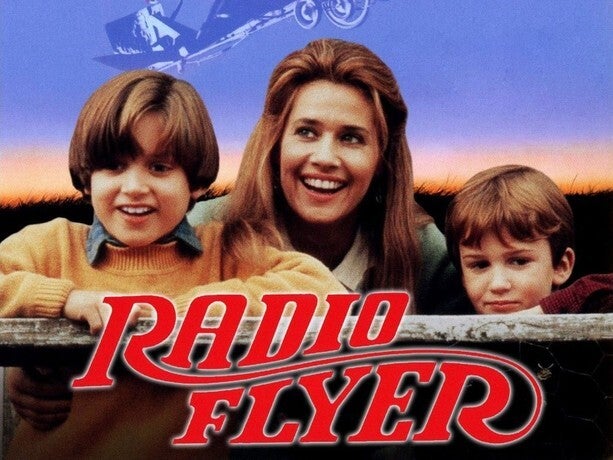
2. Radio Flyer (1992)
Radio Flyer is a story about two brothers. The story is narrated by the older brother, now an adult with his own children. He is telling his children the importance of a promise. In the story, their mother remarries. The stepfather is abusive to the younger brother. Despite the abuse, the mother is stuck in the relationship. The brothers finally devise a plan where the youngest brother will escape by flying away in a homemade aircraft made from their Radio Flyer wagon. In the end, the boys succeed, with the youngest brother flying away, never to be seen again, except for postcards he sends the older brother from the many exotic locations he visited. Again, this story is left ambiguous. The narrator tells his children that "history is all in the mind of the teller. Truth is all in the telling" and concludes the story by saying "that's how I remember it." This movie depicts a loving family, with the older brother holding no animosity towards his stepdad or mother. This movie demonstrates that the concepts of "love", "forgiveness", and "grace" can ensnare a family in a cyclical pattern of domestic violence. Non of the characters chose to be in a violent, abusive relationship. Instead, the characters simply have no idea how to escape or break the cycle.

3. Leon the Professional (1994)
Leon the Professional tells the story of a hitman, Leon, and a young girl, Mathilda. Mathilda and Leon are neighbors in the same apartment complex. Mathilda's family is abusive towards her. Mathilda drops out of school and is, essentially, in-home service to her parents. Her family is brutally murdered due to her father's drug business. Mathilda escapes due to Leon's reluctant intervention. At first, Mathilda continues her life as she did with her parents, essentially serving as Leon's in-house servant. Eventually, Mathilda falls in love with Leon, only for Leon to rebuff her advances and remind her of her adolescence. By the end of the movie, Mathilda is back at school, being a kid again. Despite Mathilda's awful family, she cries when they are killed. She loved her family because her family is the only world she knew. It also depicts the trauma a child will always carry from abuse, including showing "love" in distorted, socially-inappropriate ways. "Love", like "normal", is not universally understood in the same manner. To children in abusive situations, "love" is usually a chain and a cage. Sometimes, at the most basic, children and parents must learn that love is about freedom and detachment. It is this learned distorted idea of love that prevents so many children from finding proper attachment later on in life.

4. Moonlight (2016)
Moonlight follows Chiron through three stages of his life: boyhood, teenager, and young adult. Chiron has an abusive, drug addicted mother. He lives in poverty, surrounded by crime. He is bullied relentlessly and, at times, savagely beaten. He is eventually mentored by a community drug dealer and the dealer's girlfriend. He uses his mentors' house as a safe abode from the hell he lives in every day. He tries so hard to redefine who he is and escape the hell he calls home, only for him to end up a criminal and a drug dealer, following in his mentor's footsteps. Despite the wickedness of his mother, he still visits her as an adult as she navigates rehab. The movie is a heartbreaking journey that demonstrates the oft poetic rhythm life has. Despite our best efforts, we are, to some extent, destined to become a version of our parents (or mentors). The movie ends with the facade that Chiron built comes tumbling down and Chiron's true self being momentarily revealed.
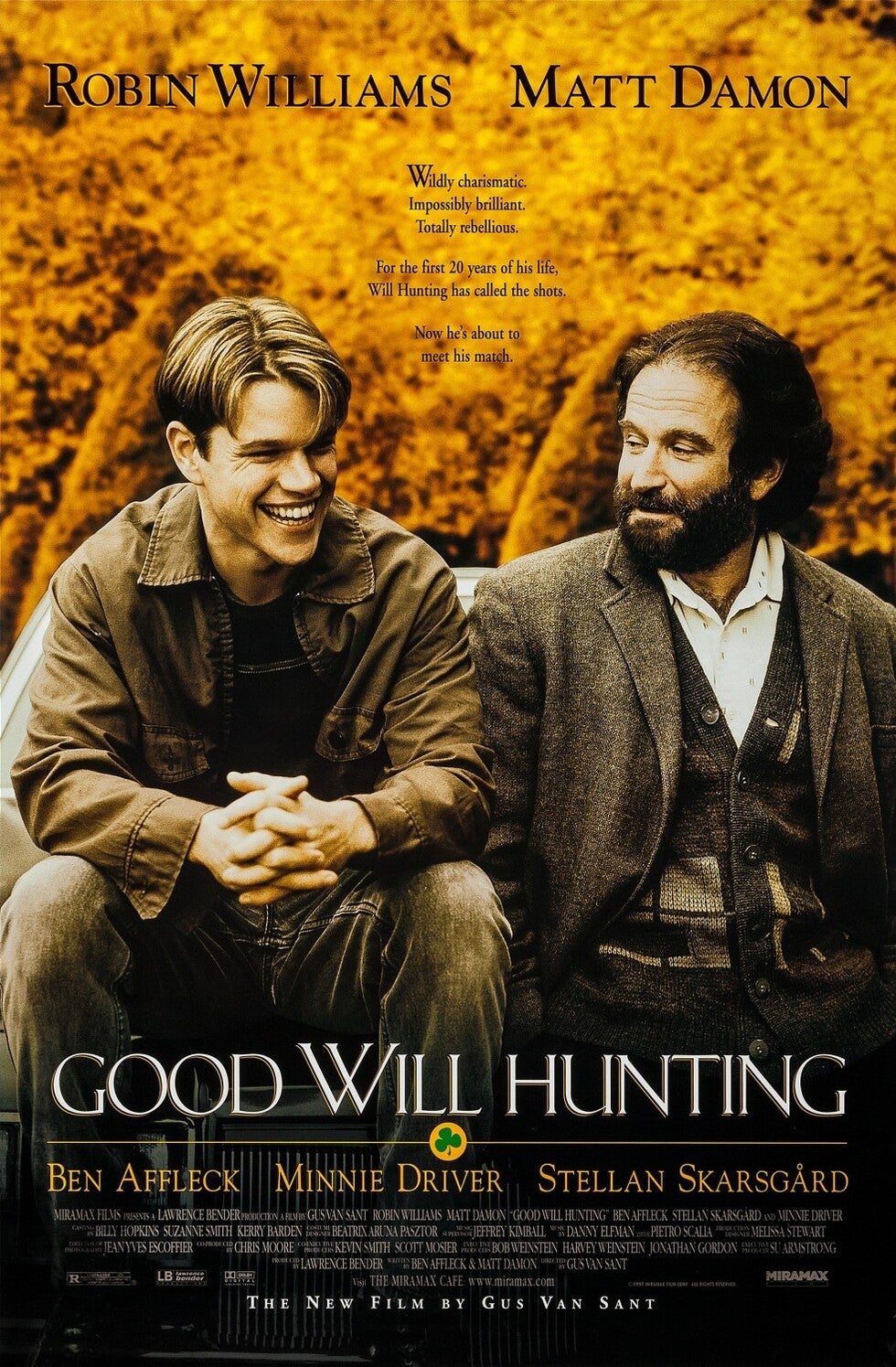
5. Good Will Hunting (1997)
Will Hunting, a genius parolee working as a janitor, is given a new chance at life. Up to that point, Will has been stuck in life, hiding behind his intellect and attacking other's weaknesses in order to protect his fragile self. Despite the potential, he accepted a lot in life he feels he deserved. Eventually, a psychiatrist, Dr. Sean Maguire, successfully navigates Will's defense systems, breaking him down to the point where Will discloses the child abuse he endured. Will finally breaks down but also accepts that the abuse he endured was not his fault. He finally left his rut in life to embark on a journey, moving forward for the first time since youth. Childhood trauma will always impact adulthood. That is why so many parents in the child welfare system were also children of that very system. It is only through patience and an unorthodox approach that allows Dr. Maguire to assist Will to move beyond Will's fragility to begin life anew. It reminds us that we, as professionals, when dealing with parents and children, we must be patient and meet them at their level, with arms open and ready to accept them. Only through this mutual respect can we really discover what is holding them back.
There are, of course, several other films that could be added to this list. But, I believe these five films will begin to provide a better perspective to people who have never had to endure the emotionally draining and depressing work of child welfare. Happy Thanksgiving.

Comments
There are no comments for this post. Be the first and Add your Comment below.
Leave a Comment